


Transaction simulation isn’t optional — it’s how you stop signing in the dark
August 20, 2025 2:37 pmMost DeFi users assume a wallet’s confirmation screen reflects what will happen on-chain. That’s the common misconception. In practice, a signature dialog can hide intermediate token movements, approval escalations, or gas traps. Transaction simulation, when done correctly, changes that dynamic: it reconstructs the likely on-chain result before you sign and surfaces the actual token balance changes and fees so you can make an informed decision.
For US-based power users who manage cross-chain positions, interact with complex DeFi primitives, or operate institutional wallets, simulation is not a convenience — it’s an operational control. This article explains how transaction simulation works under the hood, why Rabby’s approach is meaningful, where simulation can fail, and how to integrate simulation into a defensible DeFi workflow.
How transaction simulation works: mechanics, inputs, and practical output
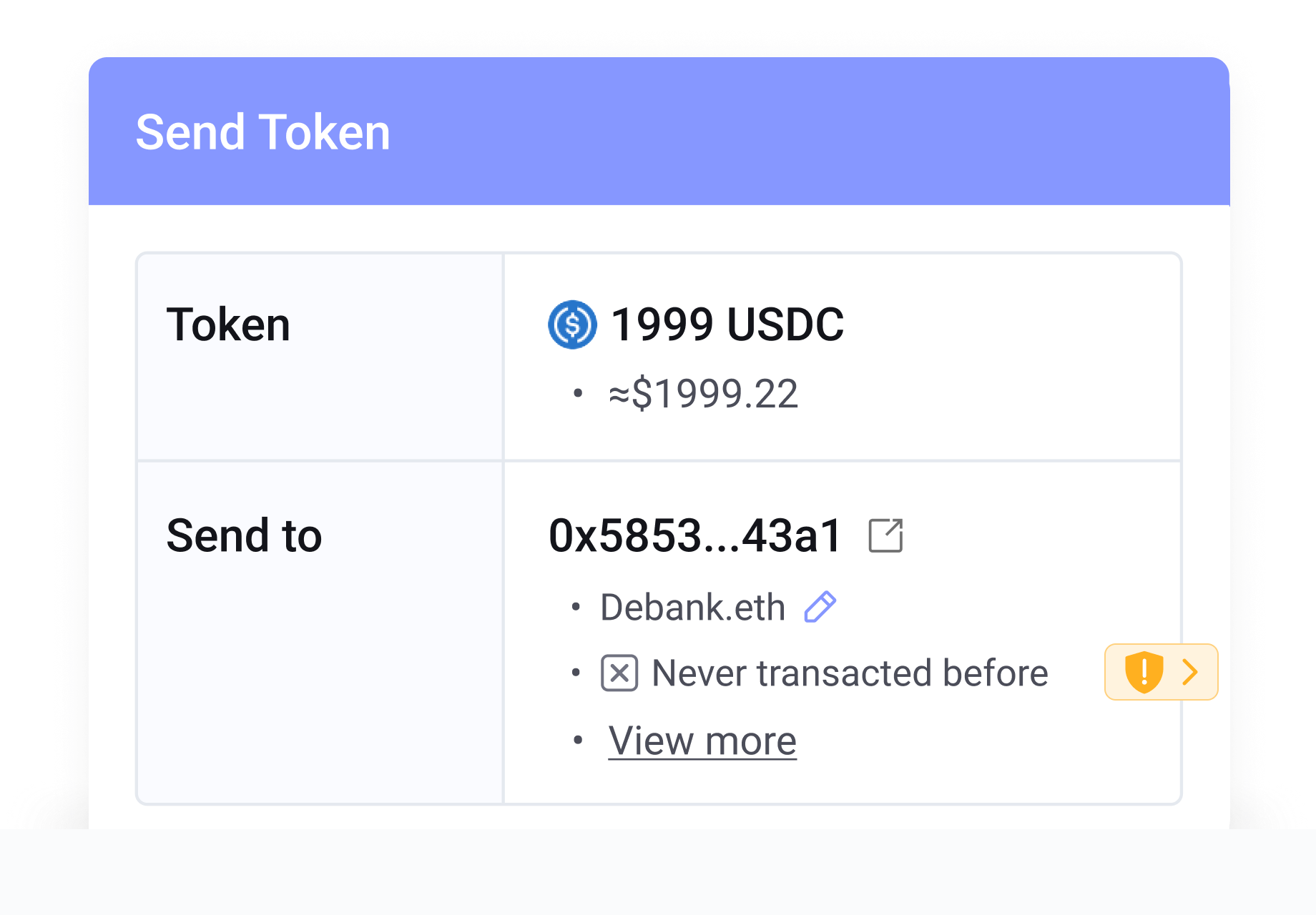
At its core, transaction simulation runs your proposed transaction(s) against a model of the blockchain state to predict the result. Mechanically this requires three things: (1) the exact calldata and value you will sign, (2) an accurate node or archive-state endpoint representing current chain state, and (3) deterministic execution logic — the same EVM bytecode and gas rules used by miners. A wallet like Rabby intercepts the dApp’s requested call, replays it locally or via a trusted RPC, and renders the predicted token balance deltas and fee costs. That removes the “blind signing” problem in which users accept vague approvals or opaque swaps.
Two practical outputs matter to a power user: the net token movements (which tokens and how much you will lose or gain) and the fee composition (base fee, priority tip, gas used). Good simulation also shows approval changes (increases or revocations), internal transfers triggered by contracts, and reverts or partial fills for multi-step transactions. Rabby presents these results before confirmation, so you can see the estimated final balances and whether a transaction will fail under current conditions.
Why this matters: examples and decision rules
Consider three real-world scenarios where simulation changes behavior:
1) A DEX swap that appears to sell 10 USDC for ETH but actually first grants an infinite approval to a routing contract — simulation will reveal the approval change, not just the swap. Decision rule: never confirm approvals without explicit bounds unless you understand the contract’s custody model.
2) A leveraged position close to liquidation where a margin call could cause multiple internal transfers. Simulation shows the net token deltas and whether you will end up short after fees. Decision rule: require simulation for any leverage adjustment above a predefined slippage threshold.
3) Cross-chain gas top-ups or bridged swaps that rely on relayers. Simulation exposes missing recipient liquidity or a mismatched token bridge behavior. Decision rule: for cross-chain operations, treat simulation as a preflight checklist item and pair it with on-chain monitoring post-execution.
Where simulation helps and where it breaks: limitations and failure modes
Simulation reduces risk but does not eliminate it. Known limitations to keep in mind:
– State staleness: simulations use a snapshot of chain state. Rapidly moving markets or mempool frontrunning can change the actual outcome between simulation and inclusion. In volatile situations the simulation is an informative but not binding prediction.
– Off-chain oracles and timelocks: actions that depend on external oracle updates — price feeds, orderbook state, or timelocks — can produce different results when the external input changes between simulation and execution.
– Non-deterministic relayer behavior: when transactions pass through relayer services or meta-transaction systems, the simulation assumes a canonical path; relayer substitutions or modified calldata can change on-chain effects.
– Coverage limits: simulation can’t prove a contract is secure. It reveals what the contract would do given current code and state, but it won’t discover hidden admin backdoors or future governance proposals that alter behavior.
Rabby’s design choices: how they shape the trade-offs
Rabby takes a layered approach: transaction simulation plus a security engine that flags hacked contracts, suspicious approvals, and missing recipients; automatic network switching; and an explicit presentation of token deltas and fees. For a DeFi power user, that configuration provides a compact decision surface: you see what will move and why, and you receive alerts for known-risk contracts.
Trade-offs embedded in that design are important. Because Rabby prioritizes local clarity, it depends on reliable RPC endpoints and timely state. Its open-source MIT license invites audits, which improves transparency but does not guarantee immunity from logic errors. Historical context matters: Rabby responded to a 2022 exploit by freezing and compensating users and increasing audits, which shows operational responsiveness but also demonstrates that simulation and alerts are complements, not replacements, for secure contract design.
Operational best practices for US DeFi power users
Here are decision-useful heuristics you can apply immediately:
– Use simulation as a hard stop for unusual approvals: if a simulation shows allowance increases without explicit need, revoke or set bounds before proceeding.
– Treat simulation outputs as probabilistic forecasts: attach a confidence level based on on-chain volatility, and widen your slippage/tolerance settings accordingly.
– Pair simulation with hardware wallets and multi-sig for high-value actions: Rabby supports Ledger, Trezor, and multisig integrations; use them to add layers of human and device-level checks.
– Maintain a small gas buffer on each chain and use Rabby’s cross-chain gas top-up when needed to avoid failed transactions that can still burn fees.
What to watch next: signals and conditional scenarios
If you rely on transaction simulation, monitor three signals that will change its usefulness: (1) changes in RPC reliability and the emergence of more archive endpoints (which improve replay fidelity), (2) dApp adoption of meta-transactions and relayers (which can complicate simulation assumptions), and (3) improvements in automated static analysis and runtime verification tools that could augment simulation with vulnerability detection. If these trends progress, simulations will become more reliable and richer; if they stall, users must compensate by tightening operational controls.
For readers who want to evaluate or adopt a simulation-capable wallet, a pragmatic next step is to test the same transaction across multiple wallets and node providers, compare simulations, and observe divergences. That cross-check reveals where assumptions differ and which node or analysis tool gives the most conservative — and therefore operationally safer — result.
To try a wallet that exposes these pre-signature mechanics in a practical UI and supports hardware wallets and multi-sig workflows, consider the browser and multi-platform client options for rabby wallet. Use simulation results as one input in a layered security posture, not as a single point of trust.
FAQ
Does transaction simulation guarantee a transaction will not fail?
No. Simulation predicts outcome given current chain state and code. It cannot guarantee results if the mempool changes, oracles update, or relayers modify the final calldata. Treat simulation as a high-quality forecast, not a contract.
Can simulation detect malicious contracts or backdoors?
Simulation can reveal immediate, observable behaviors — token transfers, approvals, reverts — and Rabby’s engine flags known compromised contracts. It cannot prove the absence of hidden admin keys, future governance changes, or off-chain triggers; code review and formal audits remain necessary for deep trust.
How should institutions combine simulation with multisig?
Use simulation to create a readable preflight that signers can verify independently. Integrate simulations into your signoff checklist: require confirmation that token deltas and fee estimates match expected outcomes and that no unbounded approvals are present before any signer approves a multisig transaction.
Does simulation add latency to UX?
Yes, but the trade-off is deliberate. A brief preflight query to an RPC or local emulator adds milliseconds to seconds, which is worth the reduction in blind-signing risk for complex or high-value transactions.